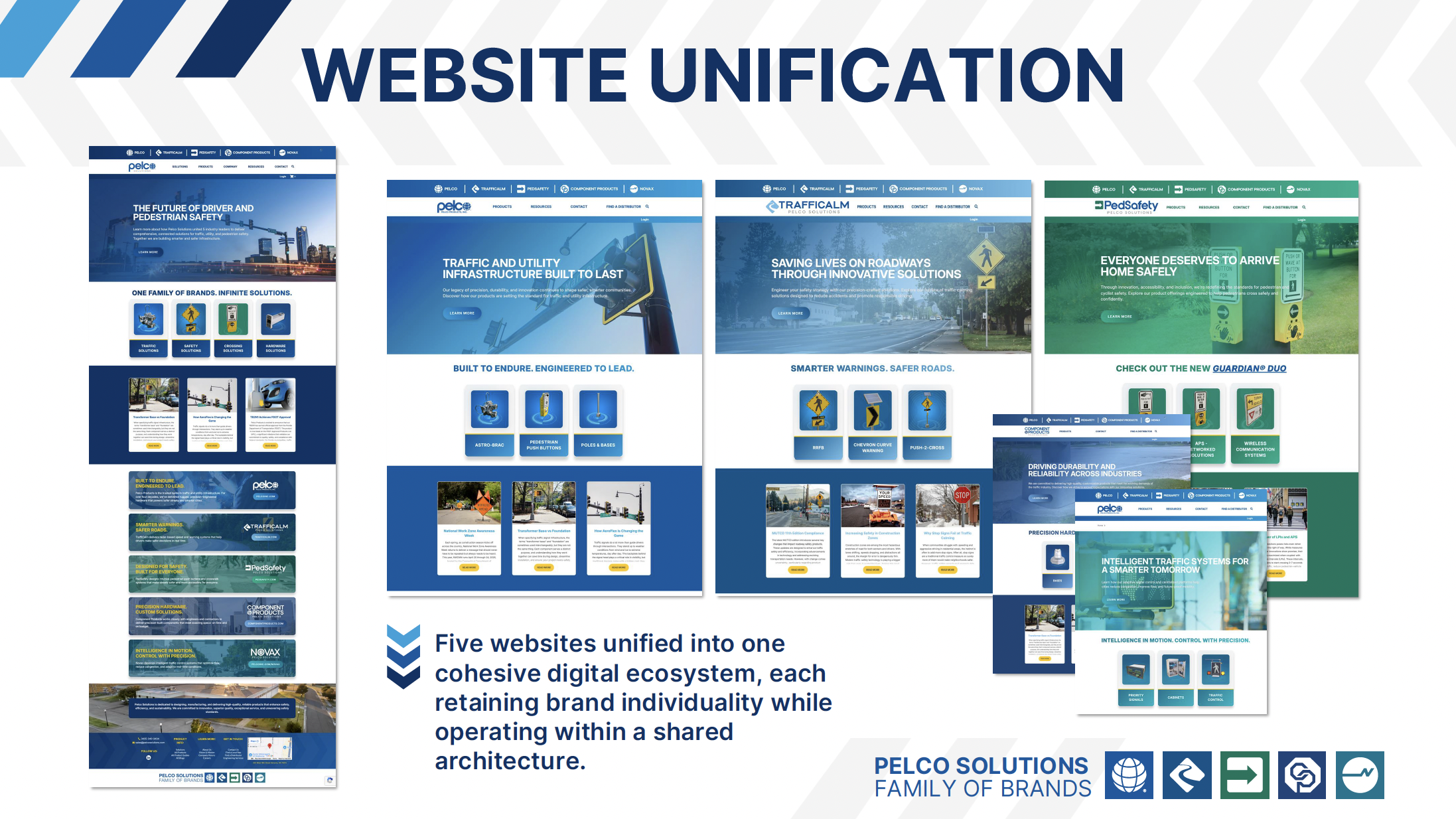
Case Study: Digital Ecosystem Redesign
Unified Digital Experience | Taxonomy & Navigation | Strategic Clarity
1. The Problem Behind the Problem
Pelco’s digital presence had grown organically over years of acquisitions, legacy operations, and siloed product teams. The result was a fragmented digital ecosystem: multiple websites, inconsistent navigation, conflicting taxonomy, uneven messaging, and a customer journey that changed dramatically depending on which site a user happened to land on.
Customers weren’t confused because the products were complex — they were confused because the digital experience didn’t reflect a unified brand or a coherent system.
The real problem wasn’t the websites themselves; it was the lack of a shared digital architecture.
2. The Strategic Insight
A digital ecosystem is only as clear as the brand system behind it.
The websites weren’t failing because of design or content gaps — they were failing because they were built on different assumptions, different naming conventions, and different interpretations of the brand.
The insight: To fix the digital experience, we had to fix the underlying structure.
This meant creating:
A unified taxonomy
A shared navigation logic
A consistent messaging hierarchy
A single strategic point of view
A digital expression of the new enterprise brand
The digital ecosystem needed to become the proof point of the brand evolution.
3. The Strategic Approach
I led a full digital transformation grounded in brand architecture, human‑centered insight, and cross‑functional collaboration.
A. Diagnose the Digital Landscape
Audited all legacy websites
Mapped navigation patterns, content gaps, and friction points
Identified inconsistencies in naming, taxonomy, and messaging
Analyzed customer behavior and search patterns
Connected digital issues to brand‑system issues
B. Build the Unified Digital Architecture
Created a single taxonomy for products, categories, and solutions
Developed a unified navigation model that reflected how customers think
Aligned naming conventions with the new brand architecture
Established a messaging hierarchy that clarified product relationships
Built a scalable structure for future products and platforms
C. Shape the Digital Narrative
Rewrote product and solution narratives for clarity and coherence
Developed messaging that connected customer needs to brand value
Ensured consistency across product pages, solution pages, and resource content
Created a digital tone that matched the new brand identity
D. Partner Across Functions
Worked closely with:
Product
Engineering
Sales
Legal
Information Technology
Creative teams
External agencies
This ensured the digital ecosystem wasn’t just redesigned — it was adopted.
E. Execute the Unified Digital Experience
Consolidated multiple legacy websites into one modern ecosystem
Implemented unified navigation and taxonomy
Improved clarity, usability, and customer confidence
Built a scalable foundation for future digital growth
4. The Creative Partnership
This project required both strategic altitude and executional intimacy.
I partnered with designers, UX teams, product managers, engineers, IT, and content creators to ensure the digital experience reflected the brand’s new clarity. The work included:
UX wireframes
Content strategy
Messaging development
Visual system alignment
Cross‑functional reviews
Launch planning
The digital ecosystem became a living expression of the brand system.
5. The Outcome and Caveat
The Outcome:
The redesign established a unified, modern digital ecosystem across all Pelco Solutions brands. Every site now follows a shared design system, consistent taxonomy, and a coherent user experience that clearly ladders up to Pelco Solutions as the parent brand. The new structure replaces years of fragmentation with a connected, scalable framework that supports future growth, content expansion, and platform integration.
The Caveat:
While the ecosystem framework is complete, the live site is still undergoing technical refinement. Several implementation issues, such as intermittent image rendering, missing catalog data, and SuiteCommerce limitations, are being actively resolved. These challenges relate to platform constraints and ongoing development, not the underlying brand system or architecture. The strategic redesign is fully in place; the technical execution continues to evolve.
6. Why This Case Study Matters
This project demonstrates the ability to:
Translate brand architecture into digital clarity
Build systems that scale
Shape taxonomy, navigation, and messaging
Partner across UX, product, engineering, and creative
Turn complexity into a coherent customer experience
Protect the strategic idea through execution
Lead cross‑functional digital transformation