
2. The Strategic Insight
The breakthrough came from seeing Pelco not as a collection of products, but as an ecosystem.
If Pelco wanted to evolve into a modern technology company, it needed:
A platform identity that could unify digital tools and hardware
A naming system that could scale across product families
A brand architecture that clarified relationships and hierarchy
A cross-functional process that aligned product, engineering, IT, legal, and leadership
The insight was simple but powerful:
Fix the system, and the brand will fix itself.
This shifted the work from “refreshing names and messaging” to building a scalable brand architecture that could support Pelco’s next decade of innovation.
3. The Strategic Approach
a. System-Level Brand Architecture
The unified architecture that clarified how platforms, hardware, software, and product families relate. This became the backbone for Pelco’s digital ecosystem, app consolidation, and product hierarchy.
b. Naming Frameworks & Trademark Strategy
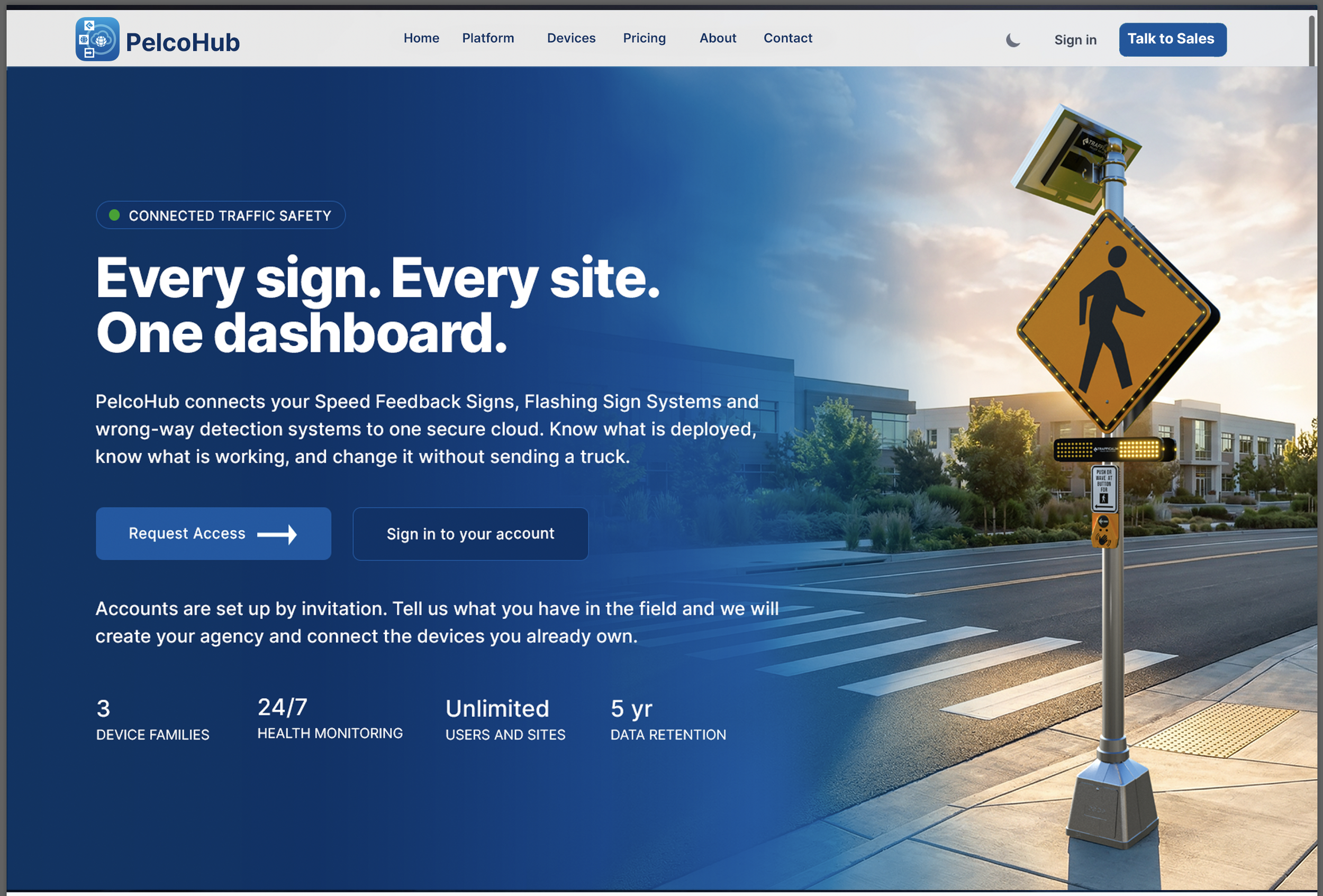
I led the naming strategy for Pelco’s newest flagship products — PelcoOne, PelcoHub, PEDSight, and TB2N1 — developing names that were intuitive, protectable, and aligned with the new architecture. Each name underwent structured trademark research and legal vetting to ensure long-term viability.
c. Platform Identity Development
PelcoOne and PelcoHub became the anchors of Pelco’s digital transformation. Their names were intentionally crafted to signal simplicity, centralization, and future scalability across modules and product families.
d. Cross-Functional Alignment
I partnered with product, engineering, IT, legal, sales, and executive leadership to ensure naming, architecture, and messaging were grounded in technical realities, customer needs, and long-term strategy.
e. Scalable Messaging & Navigation
The new architecture informed clearer product navigation, unified sales storytelling, and consistent terminology across Pelco Products, TraffiCalm, PedSafety, and emerging Pelco Solutions technologies.
4. The Creative Partnership
This work required deep collaboration across disciplines:
IT, Product & Engineering — to understand technical constraints and future roadmap
Legal — for trademark research, risk assessment, and clearance
Leadership — to align on strategic direction and ecosystem vision
Sales Teams — to ensure naming and messaging supported real-world conversations
The partnership wasn’t just cross-functional — it was co-creative, ensuring the system reflected the needs of every part of the organization.
5. The Outcome
Pelco Solutions now has:
A unified, scalable brand architecture
Trademark-cleared product names for flagship platforms and hardware
Clear platform identities (PelcoOne, PelcoHub) that anchor the ecosystem
Consistent naming conventions across product families
Cohesive messaging and navigation for customers and sales teams
A foundation for future product launches and digital expansion
Pelco transformed from a fragmented collection of legacy brands into a coherent, modern, system-driven technology company.
6. Why This Case Study Matters
This project demonstrates the ability to:
Systems thinking — seeing the pattern inside complexity and designing frameworks that scale
Naming expertise — creating intuitive, protectable names grounded in strategy and legal viability
Platform identity development — shaping the narrative and architecture of digital ecosystems
Cross-functional leadership — aligning product, engineering, legal, and creative partners
Human-centered clarity — simplifying without flattening, and building meaning into every layer of the system
Enterprise Naming System | Product Architecture | Strategic Narrative
1. The Problem Behind the Problem
Pelco Solutions was no longer struggling with branding but it was struggling with coherence.
Multiple legacy brands, overlapping product families, inconsistent naming conventions, and fragmented digital experiences created friction everywhere: sales conversations, customer understanding, product navigation, and internal alignment. The symptoms looked like surface‑level brand issues, but the underlying tension was deeper:
Pelco lacked a system.
A system for naming. A system for platform identity. A system for product hierarchy. A system for how the brand should scale as new technologies emerged.
The real problem wasn’t inconsistency — it was the absence of a unified architecture capable of supporting Pelco’s future.